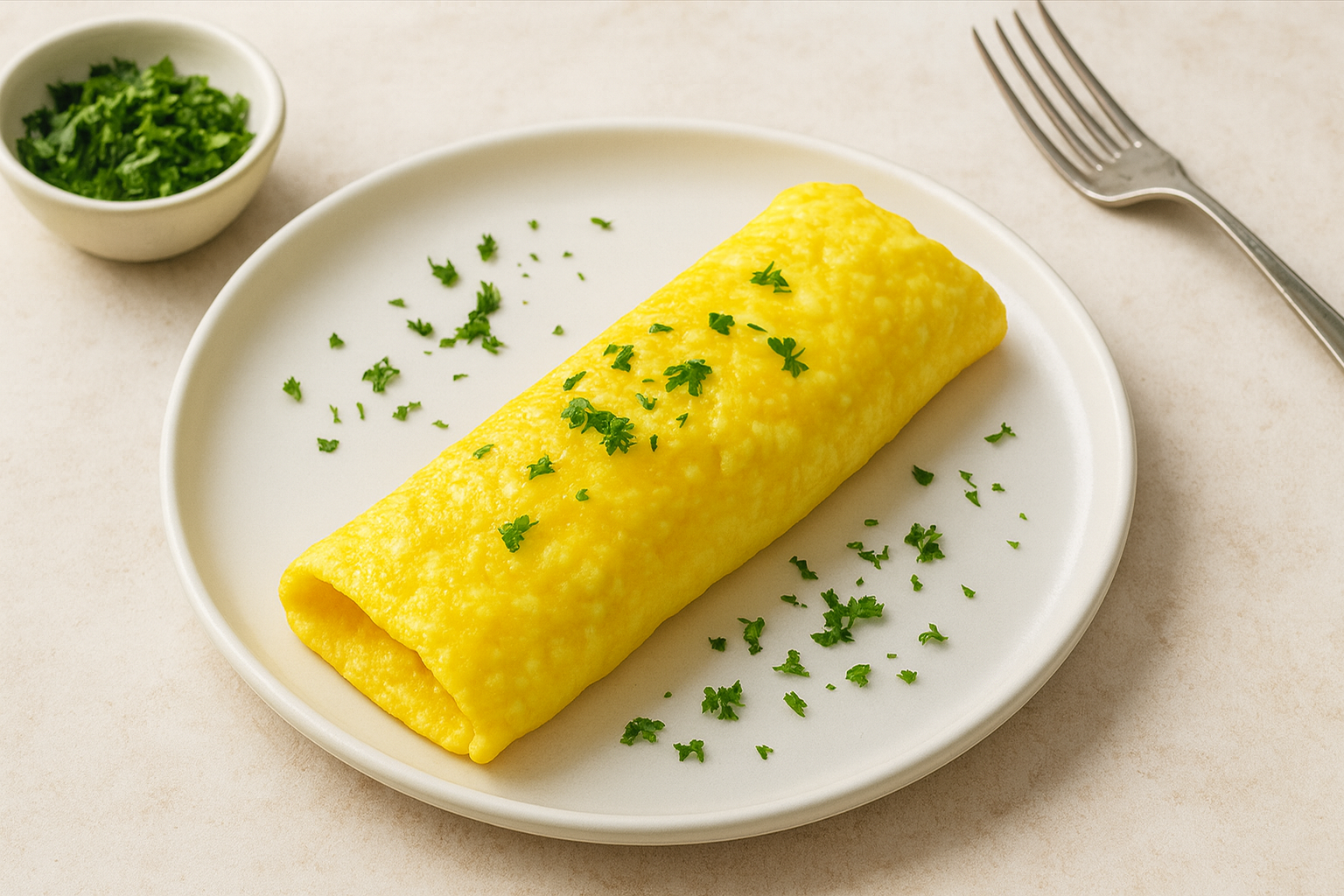
If you love elegant, restaurant-style breakfasts, then a French Omelette is the perfect dish to master. Unlike the regular fluffy omelettes you may already know, a French omelette is creamy inside, silky outside, and beautifully rolled with zero browning. It’s one of the most iconic dishes in French cuisine and surprisingly quick to make once you understand the technique.
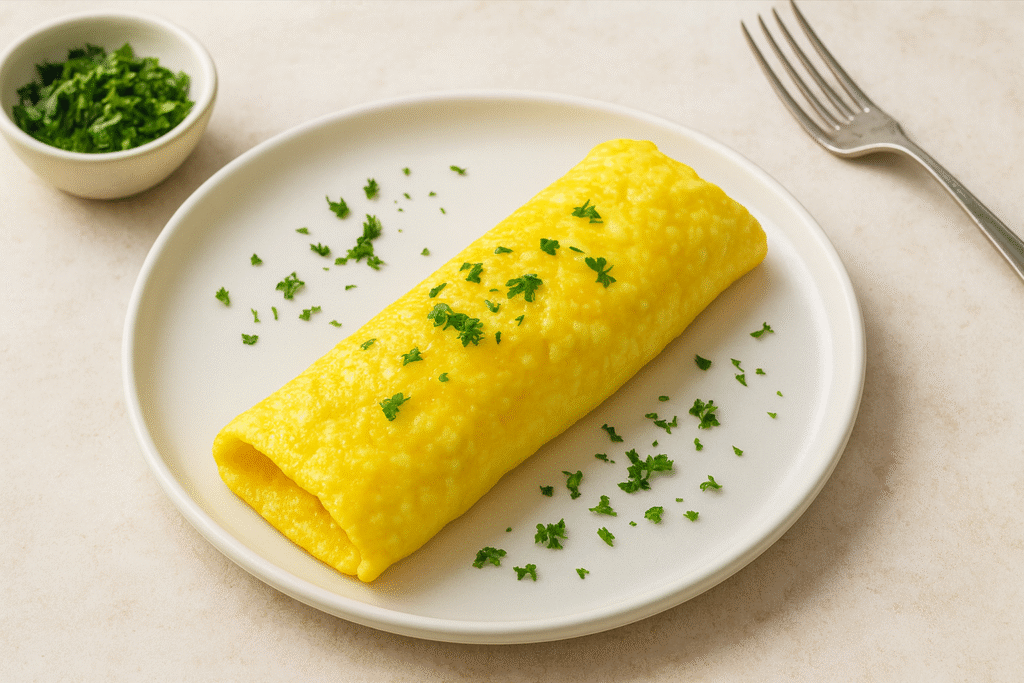
Table of Contents
What Is a French Omelette?
A French omelette is a smooth, tender, pale-yellow egg roll cooked gently over low heat until the inside remains soft and custard-like.
Unlike the classic American omelette that is browned and folded, a French omelette focuses on:
- No browning at all
- Creamy texture inside
- Silky surface outside
- Soft, melt-in-mouth feel
- Rolled shape instead of folded
It is a symbol of skill in French cooking — and you are about to master it too!
Why French Omelette Is Popular Worldwide
A French omelette is popular because it is:
- Simple – made with just eggs, butter, salt, and pepper.
- Healthy – rich in protein and perfect for breakfast.
- Elegant – looks like a dish served in high-end French restaurants.
- Quick – ready in under 5 minutes.
This dish is also loved by fitness enthusiasts, chefs, and home cooks who want a delicious yet classy breakfast.
Ingredients for French Omelette
| Ingredient | Quantity |
|---|---|
| Eggs | 3 large |
| Butter | 1 tbsp (unsalted) |
| Salt | 1/4 tsp |
| Black Pepper | 1/4 tsp |
| Fresh herbs (optional: chives, parsley, tarragon) | 1 tbsp finely chopped |
| Cheese (optional) | 1–2 tbsp grated |
These minimal ingredients create a dish full of elegance and flavor.
How to Make a French Omelette – Step-by-Step Instructions
Here is the complete method to help you make a smooth, restaurant-quality omelette.
Step 1: Beat the Eggs Properly
Crack 3 eggs into a bowl.
Whisk them using a fork or whisk until:
- The yolks and whites are fully blended
- The mixture turns smooth
- No streaks remain
Add salt and pepper to season.
Do not overbeat — you only need a uniform texture.
Step 2: Prepare the Pan
For the best results:
- Use a non-stick pan (8-inch)
- Keep the heat low to medium-low
- Add 1 tbsp butter and let it melt without browning
A French omelette should stay pale, so avoid high heat at all costs.
Step 3: Pour and Stir Continuously
Once the butter melts, immediately pour in the whisked eggs.
Now the technique begins:
- Use a rubber spatula
- Stir the eggs in tiny circular motions
- Keep the mixture moving constantly
Your goal is to create tiny curds while keeping the surface smooth.
The mixture will begin to thicken but should not brown or fry.
Step 4: Shape the Omelette
When the eggs are slightly set but still creamy and moist, stop stirring.
Now:
- Tilt the pan so the uncooked egg covers the surface
- Use the spatula to gently fold or roll the omelette from one side to the other
This creates the signature French omelette roll.
Step 5: Final Roll and Plate
Slide the rolled omelette gently onto a plate.
Keep the seam side down to maintain the shape.
A perfect French omelette should look:
- Soft
- Smooth
- Shiny
- Without any brown spots
Brush a little extra butter on top for extra gloss (optional).
Optional Fillings to Add Inside the French Omelette
Although the classic version is plain, you can add fillings:
1. Cheese Fillings
- Gruyère
- Swiss cheese
- Cheddar
- Goat cheese
2. Herb Fillings
- Chives
- Parsley
- Dill
- Tarragon
3. Mushroom or Spinach
Sauté mushrooms or spinach separately and add as a filling.
4. Garlic Butter
Mix softened butter with garlic and herbs — spread inside before rolling.
5. Smoked Salmon
Thin strips of smoked salmon make the omelette gourmet-style.
Tips for Making the Perfect French Omelette
These tips guarantee success every time:
✔ Keep the heat LOW
High heat browns the eggs, ruining the classic pale look.
✔ Use fresh eggs
They give better texture and taste.
✔ Continuous stirring is key
Tiny motions create the soft curds.
✔ Don’t overcook
The inside should remain slightly creamy.
✔ Use a non-stick pan
Helps with rolling and prevents sticking.
Common Mistakes to Avoid
Many beginners spoil the French omelette by doing one of these:
- Cooking on high heat
- Letting the omelette brown
- Overcooking until fully dry
- Not whisking properly
- Using too large a pan
- Adding too many fillings
Keep it simple — that’s the beauty of this recipe.
Serving Suggestions
Serve your French omelette with:
- Fresh green salad
- Toasted baguette
- Avocado slices
- Roasted cherry tomatoes
- A cup of black coffee or fresh juice
It makes a luxurious yet simple breakfast or brunch.
Read this also: https://us.rjvicky.com/delicious-cheese-and-dairy-recipe-cheese-and-dairy/
Nutrition (Approx per serving)
- Calories: 250
- Protein: 18g
- Fat: 20g
- Carbohydrates: 1g
- Fiber: 0g
This makes it a great high-protein breakfast.
Conclusion
A French omelette may look like a simple egg dish, but its beauty lies in technique and precision. With just a few ingredients and slow, gentle cooking, you can create a silky, creamy, restaurant-style omelette in minutes. Whether you enjoy it plain, with herbs, or filled with cheese, this dish is perfect for breakfast, brunch, or even a quick dinner.
Now that you know the complete French omelette recipe, go ahead and try it today — you’ll fall in love with its softness and flavor!